Artificial intelligence, digital finance and cyber risk are all shifting the economic landscape worldwide. Advances in artificial intelligence are upending business processes, blockchain technology is transforming finance and creating new digital assets, and quantum computing is on the horizon.
Meanwhile, expanding digital footprints present critical cybersecurity considerations for sovereigns, companies and organizations. Browse our thought-leading research, videos, podcasts and events below for insights into all matters touching digital transformation and the broader digital economy.

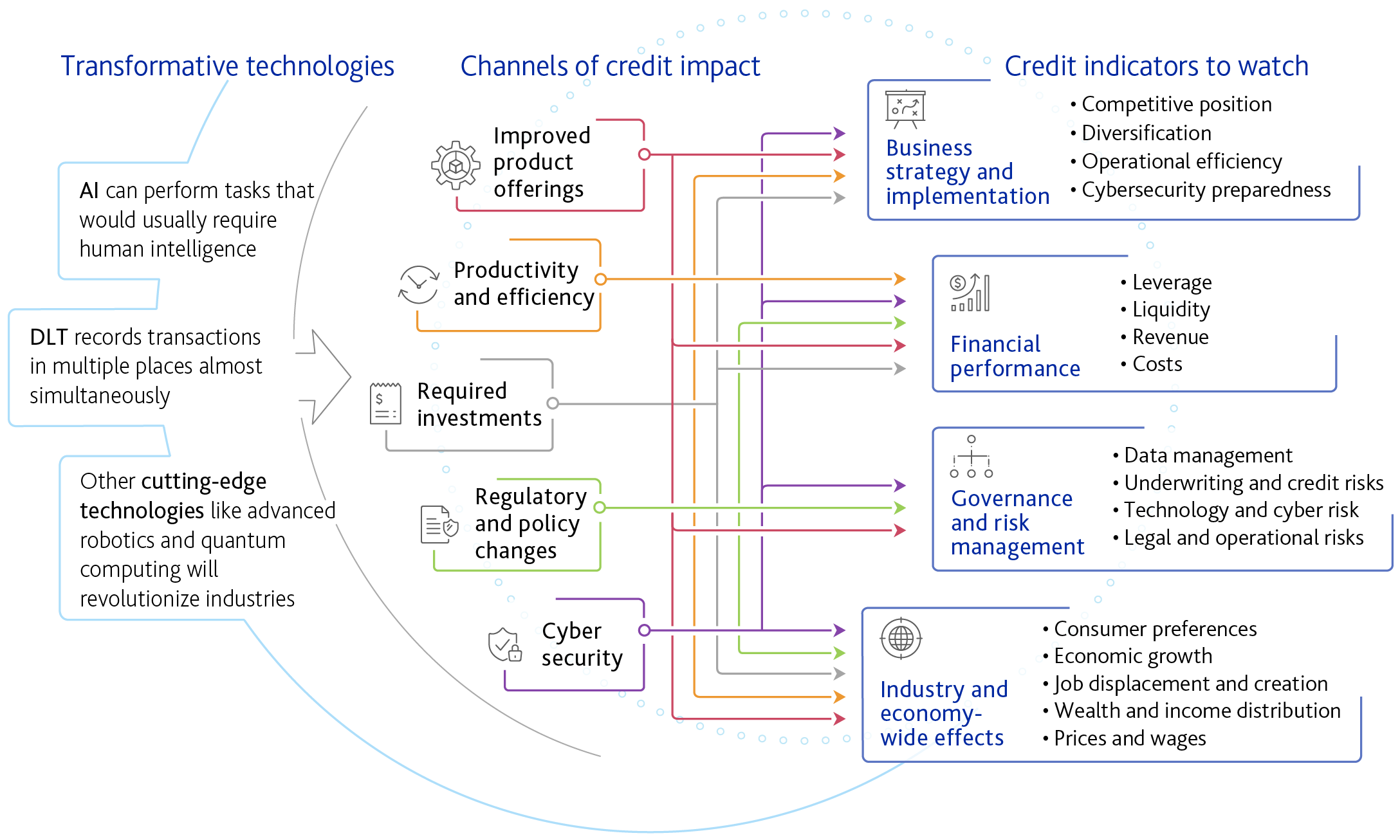
AI’s automation and augmentation of tasks will boost productivity to varying degrees. Governments’ fiscal capacity will be key to mitigating social strains and shape the pace of AI adoption.


AI advancements are transforming industries, evolving towards smarter capabilities, user-friendly features, and expanded use cases. As this progress enhances efficiency and creates new opportunities, it also introduces risks and challenges that impact credit profiles across sectors.
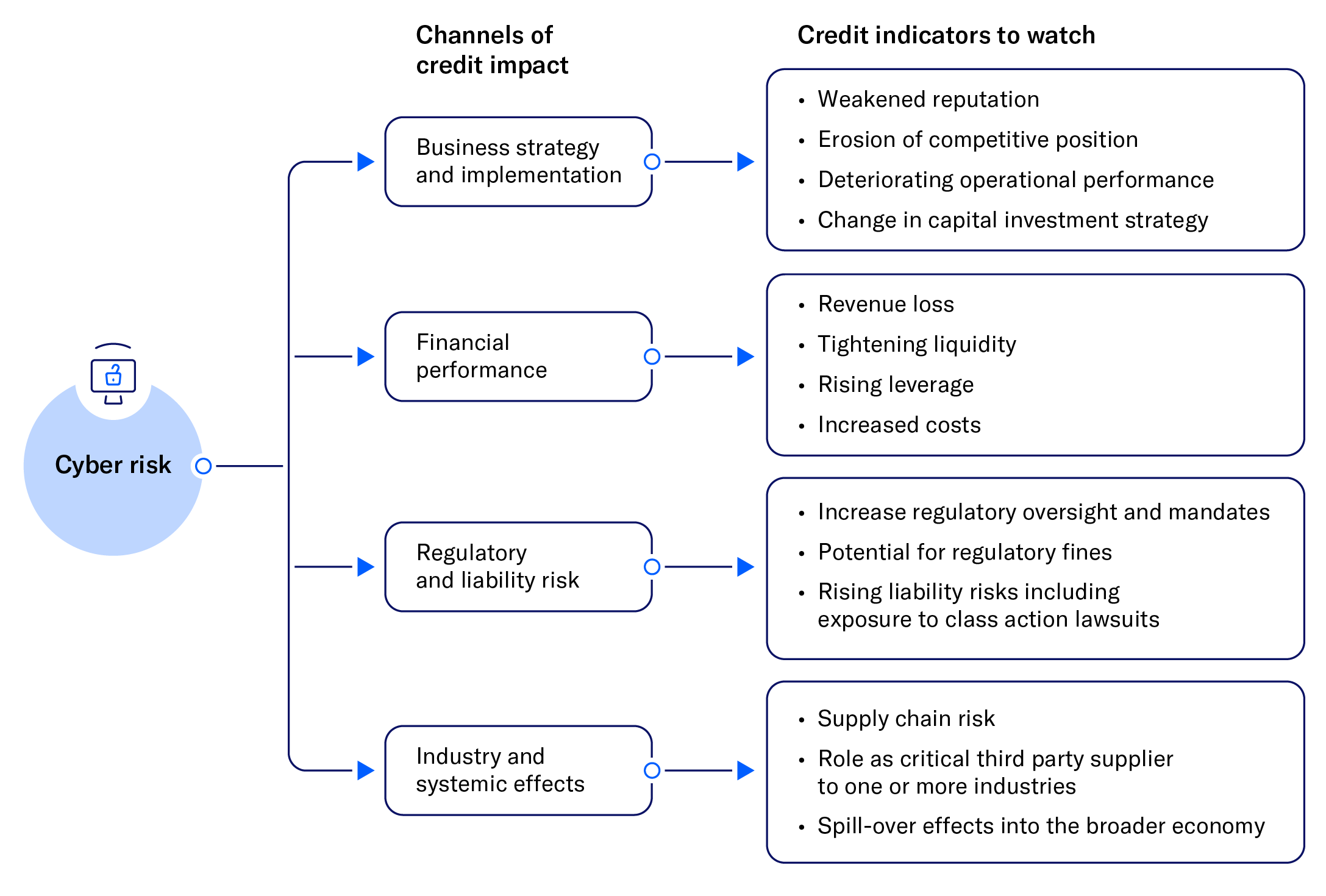
Rising digitalization has been accompanied by a growing incidence of cybercrime. Cyberattacks can undermine the creditworthiness of companies, organizations and governments, across all sectors and geographies, hitting revenues, increasing costs, and eroding customer trust.
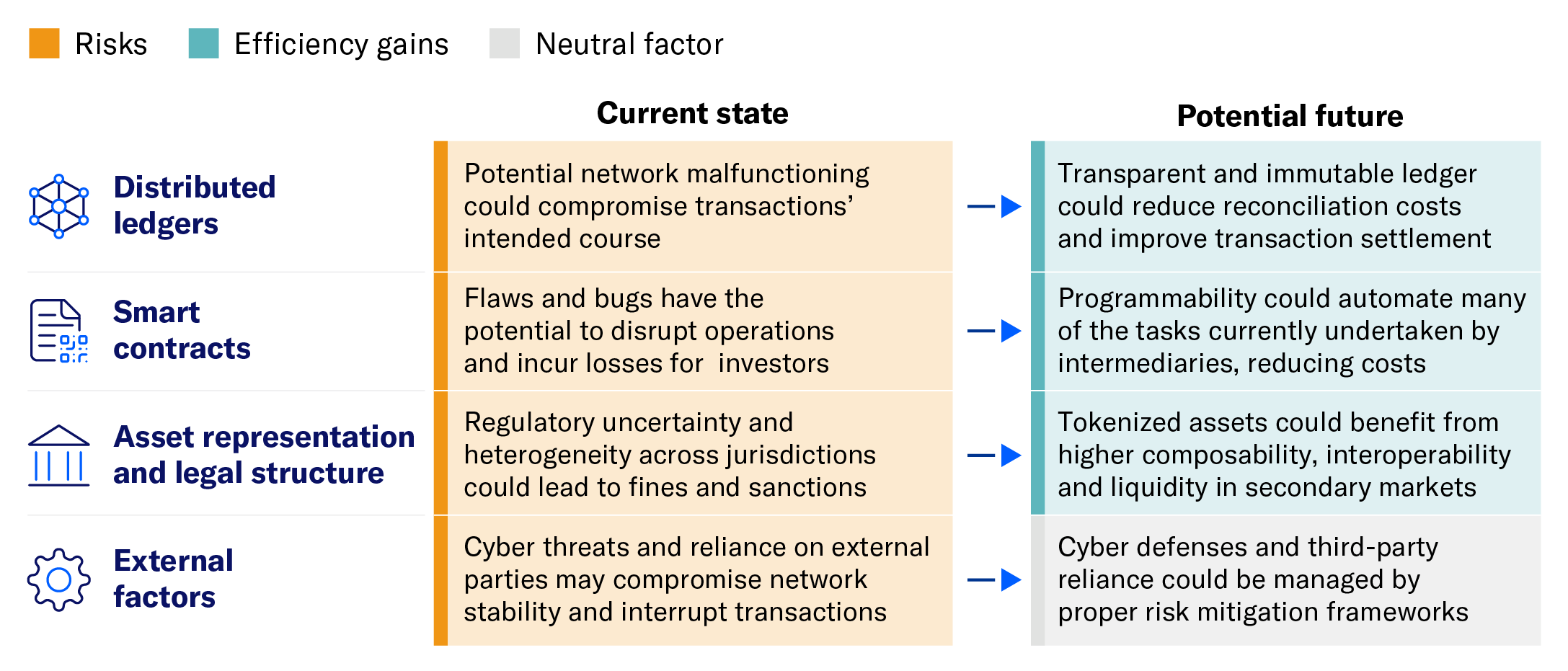
The future of digital finance is here, bringing smarter solutions and new opportunities. Financial institutions are leveraging blockchain to unlock operational efficiencies, reduce costs, and expand into innovative asset classes such as tokenized real-world assets (RWAs).
Digital assets are financial assets in digital form that have value. In this world of digital transformation, traditional financial services are now integrating with new and emerging technologies. Digital assets will reshape the financial industry in the coming years by changing the way market participants invest, raise financing, and transfer funds.
At Moody’s, we’re tracking global developments that can bridge the gap between the digital and traditional finance worlds.
As demand for artificial intelligence (AI) and cloud computing services accelerates, data centers will be the engine of the smart technology revolution. Global tech giants, or hyperscalers, are rapidly expanding into new markets, pre-leasing capacity and spurring developers to raise substantial amounts of capital through equity, loans, and bonds.


Browse our curated list of events. Hosted throughout the year across multiple regions and on a wide range of topics, we explore the risks and opportunities behind the most topical market issues. Use our calendar to find webinars and in-person conferences across a variety of sectors, industries, and key risk areas
WedNESDAY, Mar 18
Digital Frontiers 2026
Digital finance is accelerating a fundamental shift in how technology, capital and data converge – reshaping how risk is understood, measured and managed. Moody’s brings clarity to this shift, uniting trusted credit expertise with advanced AI and data-driven innovation.
Monday, Nov 17
IIF Cyber Security Roundtable: Hosted by Moody's Ratings | Managing and Quantifying Risk Amid Heightened Volatility
This series of interviews with digital economy experts distills complex topics, captures diverse insights, explores emerging trends, and offers multidimensional perspectives that link innovation to actionable knowledge.
The director of digital assets structuring at Societe Generale discusses the benefits tokenization brings to finance, and what hurdles the technology must overcome to gain scale.
Timm Reinsdorf (CEO) and Carsten Hermann (CTO) of Particula share their insights on the importance of holistic, automated risk assessments in digital asset markets.
In a Q&A, Kungfu.ai executives explain how automating document verification in a host of languages and jurisdictions can speed up workflows, reduce fraud and strengthen risk management.
FMIs are embracing new technologies, including blockchain and AI, but remain vigilant as they do so to ensure they can continue to provide safety and soundness within financial services.
In the cryptocurrency market, derivatives products are seeing increasing use. This uptick is largely attributed to cryptocurrencies' inherently high volatility, a characteristic that underscores the need for derivatives.
The Basel Committee on Banking Supervision's proposed classification conditions for crypto assets (SCO60) divides them into two groups, each with their own implications for risk management and capital treatment.

