
Author: Tom Sabbatelli-Goodyer, Director - Product Management, Moody's
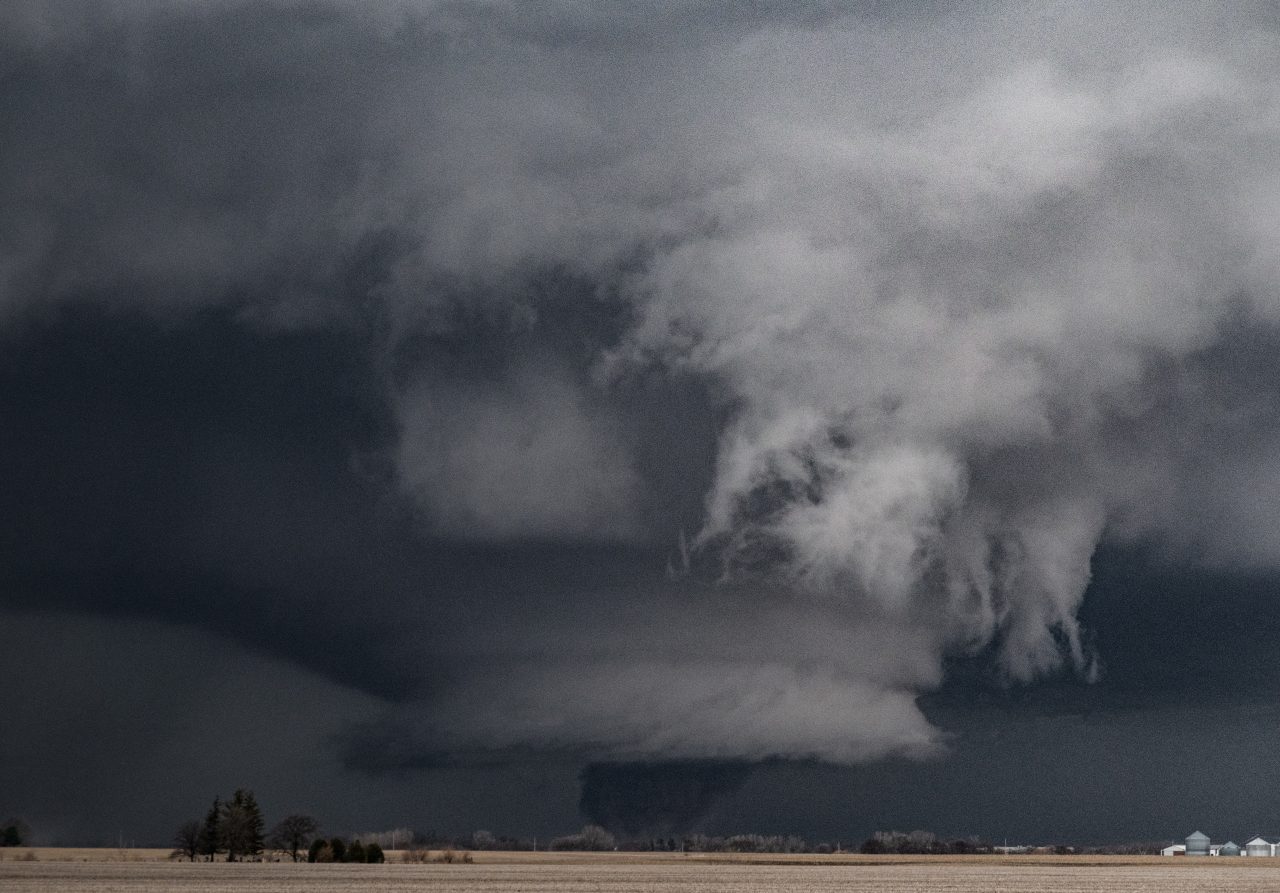
Across numerous dimensions, the overriding need to overcome uncertainty has always been the defining challenge for severe convective storm (SCS) modeling. To tackle these challenges, catastrophe models have historically looked to balance the complexity of tornadoes, hail, and damaging winds on one side against technological limitations and runtime considerations on the other.
Adding the observational biases and limited historical records for severe convective storms into the mix (a recent blog has explored the nuances of SCS data biases) leads to models that often fall short in capturing the true magnitude and variability of risk.
The previous blog gave a teaser of the innovative approaches taken by the new Moody’s RMS™ North America Severe Convective Storm High-Definition (HD) Models to ensure that they do not fall into these traps. We now want to discuss our models in more detail, and how they are designed not only to overcome these uncertainties but to transform how the market understands and manages severe convective storm risk.
Why now? The limits of today’s models
The urgency for better severe convective storm models has been underscored by recent industry experience. In the last three years, U.S. insured losses from severe convective storms have exceeded US$50 billion annually, even surpassing hurricanes in insured impact. Yet as SCS losses climb, many existing models struggle with fundamental limitations:
- Coarse hazard resolution that produces unrealistic event footprints and fails to capture the full spectrum of event severity.
- Small event sets that take shortcuts to produce exceedance probability curves, leaving portfolios exposed to volatility.
- Simplified vulnerability curves that do not reflect modern construction practices, specialty exposures, or regional nuances.
- Financial modules that overlook critical policy terms that heavily determine claims payment amounts, such as cosmetic damage exclusions, roof actual cash value (ACV) policies, and hours clauses.
These limitations translate into uncertainty for (re)insurers—uncertainty in pricing, reserving, and capital adequacy. Addressing these constraints has required more than incremental improvement; it has demanded a fundamental rethinking of how severe convective storm hazard, vulnerability, and financial outcomes are modeled.
The breakthrough: Three pillars of innovation
Launched on December 10, 2025, Moody’s RMS™ North America Severe Convective Storm HD Models redefine the standard for severe convective storm risk modeling.
Built on cutting-edge science and powered by Moody’s Intelligent Risk Platform™, these new models deliver unprecedented accuracy and insight through three key innovations:
1. Hazard that reflects reality
The models introduce a physically-based hazard framework to capture the true variability of severe convective storm events in both space and time. In the previous blog, we discussed how we leverage advanced machine learning and high-resolution reanalysis data to correct for observational biases and produce a complete view of risk.
Using this framework, millions of stochastic events were generated to simulate a vast range of realistic effects, from multi-day, multi-state SCS outbreaks to localized, attritional storms, all at unprecedented resolution. Taking the straight-line wind peril as an example, we explicitly model the full spectrum of event scales—from microbursts to multi-billion-dollar derecho events.
As a result, the hazard module represents clustering, tail risk, and regional risk drivers with scientific rigor and operational relevance.
2. Vulnerability built for today
Hazard is only half the story. A high-resolution grid system alone won’t produce realistic losses. A detailed hazard model must be matched with a comprehensive vulnerability module that reflects today’s complex built environment.
The new high-definition (HD) models introduce a fully re-engineered vulnerability module, calibrated against over US$55 billion in location- and policy-level claims data, the largest such library ever assembled for a severe convective storm model.
This allows us to validate over 2,700 property damage curves that account for modern construction practices, regional variations, and local statutes. Beyond property, we have also expanded our coverage of automobiles and specialty exposures, including renewable energy assets.
Secondary modifiers, including hail-resistant shingles and roof-mounted solar panels, are explicitly modeled, providing unparalleled precision in capturing the key elements that determine precise loss amounts.
3. Financial modeling that mirrors policy reality
Bringing a new level of sophistication to severe convective storm risk assessment, the peril benefits from the Moody’s RMS HD modeling framework, which explicitly models the likelihood of events causing no claimable damage (critical for hail) and total loss (critical for tornado) to a structure. This simulation approach, when combined with our high-resolution event footprints, produces realistic claims distributions.
The models also consider a wider array of policy terms and claims behaviors than ever before, including:
- Cosmetic damage exclusions, distinguishing between superficial and structural damage.
- Flexible hours clauses, to account for multi-day and clustered events.
- Temporal and event-based post-event loss amplification, accounting for inflationary effects after major events or a build-up of attritional events over the year.
Together, these enhancements deliver contract-level accuracy and confidence in portfolio performance—critical for pricing, capital allocation, and exposure management in an era of rising severe convective storm losses. More enhancements are planned for next year, including roof ACV endorsements, to recognize depreciation in the modeling of roof-related losses.
The power of cloud computing makes it possible
To achieve the required level of detail for location-level financial simulations, within grids of hundreds of meters and across millions of stochastic events, the use of legacy, on-premises software solutions would be unthinkable. But with the cloud-native Moody’s Intelligent Risk Platform, this is the new reality of severe convective storm modeling. Despite the comprehensive advancements in every aspect, portfolios with millions of locations are analyzed in just a few hours, giving you more time to diagnose and understand the results.
From bias to breakthrough
The conversation on severe convective storm modeling often stops at hazard. But true resilience requires a model that integrates hazard, vulnerability, and financial precision—supported by transparent validation and scientific credibility. The models achieve this and offer catastrophe modelers a compelling solution that not only overcomes the uncertainties of the past but also unlocks new possibilities for risk insight and decision-making.
Explore the new models
The launch of the Moody’s RMS North America Severe Convective Storm HD Models marks a pivotal moment for the industry. For the first time, (re)insurers will have access to a model that combines scientific rigor, computational power, and real-world calibration to deliver actionable insights at scale.
To learn more or request a technical briefing, contact Steve Drews, Moody’s Model and Product Specialist for Severe Convective Storms and Winter Storms.
LEARN MORE
Moody's insurance solutions
Our differentiated solutions bring together technology, data and analytics and insights, helping insurers, reinsurers, and brokers address their most complex challenges and make better decisions with confidence – therefore helping to close the insurance gap and drive performance.