Who are you working with?

Understanding ultimate beneficial ownership

Ultimate beneficial owners or UBOs are the individuals who own or control an organization. It isn’t always easy to discover who a company’s UBO is. There may be several UBOs, corporate structures can be complex, and ownership can be deliberately obscured to launder money or commit other types of financial crime.

It is important to know who you are truly doing business with. Use Moody’s solutions to help create greater transparency into beneficial ownership information, control, and shareholder structures.

Get the insight you need for UBO discovery, enhanced due diligence, know your customer risk management, and anti-money laundering/counter-terrorist financing compliance. Make decisions with confidence about who you work with. 


Ultimate beneficial owner (UBO) discovery

Moody's solutions

Moody’s customers can access extensive, robust, up-to-date data on millions of companies and third parties around the world. Integrate our datasets with automated discovery tools to uncover and verify beneficial ownership information – even across multiple ownership layers, international borders, and complex networks.


Moody’s Orbis database is the world’s most powerful comparable data resource on private companies, with information on more than 580 million entities worldwide. Orbis can be used to calculate power scores and integrated percentages for a fuller picture of beneficial ownership and control.

Grid provides an extensive, curated, risk-relevant database for use in anti-money laundering and counter-terrorist financing processes. Information about a person or entity is collated into a risk profile using continuous monitoring of thousands of data sources and coverage of adverse media, sanctions, watchlists, and information on politically exposed persons (PEPs).

Moody's Entity Verification API is a single API that compliance customer relationship management (CRM) or client lifecycle management (CLM) platforms can use to connect with commercial registries, financial authorities, and tax offices in more than 200 countries. Compliance teams can access original documents and data on more than 328 million companies to better inform UBO compliance processes with data straight from the source.

Maxsight™ can be used to automate UBO screening and verification via a single platform. By leveraging advanced data, analytics, and AI-led intelligence, Maxsight™ supports workflows to identify and verify beneficial ownership information. Whether onboarding new clients or conducting periodic reviews, Maxsight™ can support seamless due diligence.


Company ownership

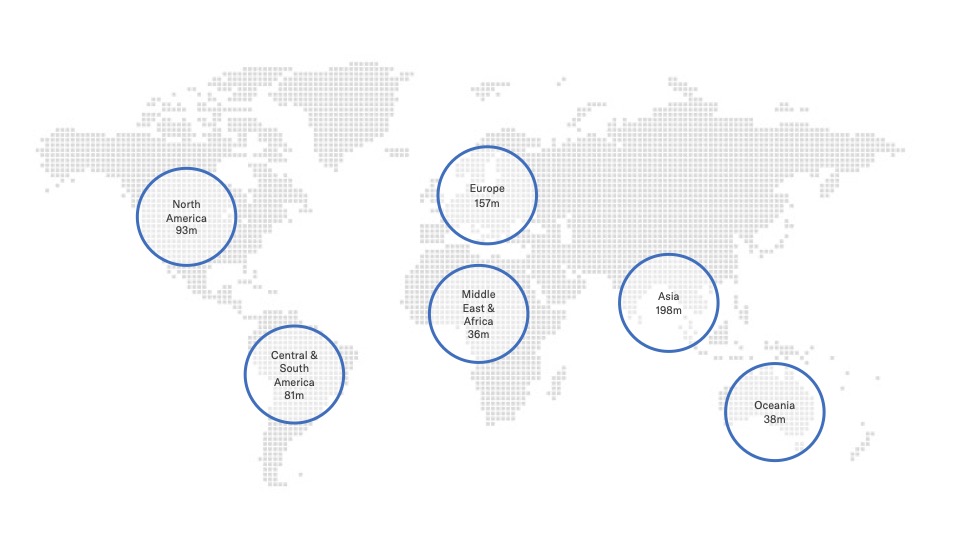
Moody's has ownership data on millions of companies worldwide


 Moody's Orbis solution, as of January 2026

Moody's Orbis solution, as of January 2026


Understanding the hidden risk associated with UBO

Moody’s ultimate beneficial ownership whitepaper

UBO transparency matters. Organizations are better positioned to mitigate risk when they can identify and verify UBOs in their network and be alerted to emerging risks.

Our latest whitepaper explores:

  • The structural and regulatory complexities that could make UBO identification challenging
  • Understanding ownership and substantial control
  • A case study on how a sanctioned individual could evade detection through layered corporate structures
  • Best practices for building a more robust risk management strategy


Close up of network data flowing


UBO webinar

Beneficial ownership & navigating the EU’s AML landscape

Beneficial ownership & navigating the EU’s new AML landscape webinar

Get insights into the changing landscape of ultimate beneficial ownership (UBO) in the context of the EU's anti-money laundering and counter-terrorist financing regulations. Listen to the playback of our webinar, hosted by Ted Datta, who was joined by a panel of experienced professionals to discuss the impact of the ECJ's ruling on National Beneficial Ownership Registers, the current state of UBO transparency, future requirements of EU AML compliance, and how to navigate best practices in this environment. 


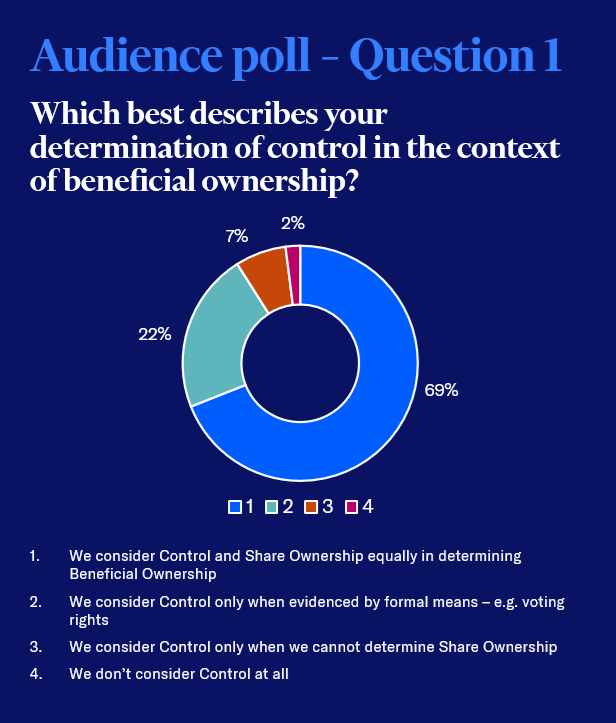
Audience poll - Which best describes your determination of control in the context of beneficial ownership?
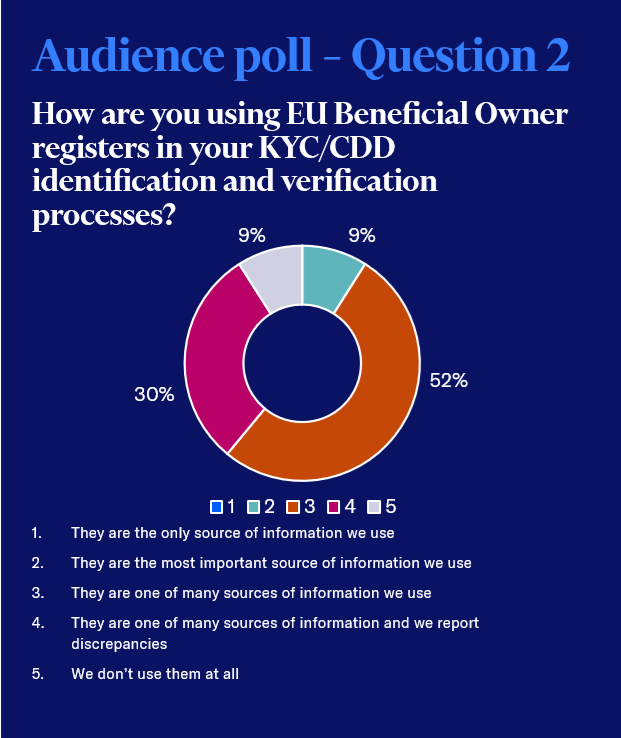
Audience poll question - How are you using EU Beneficial Owner registers in your KYC/CDD identification and verification processes?
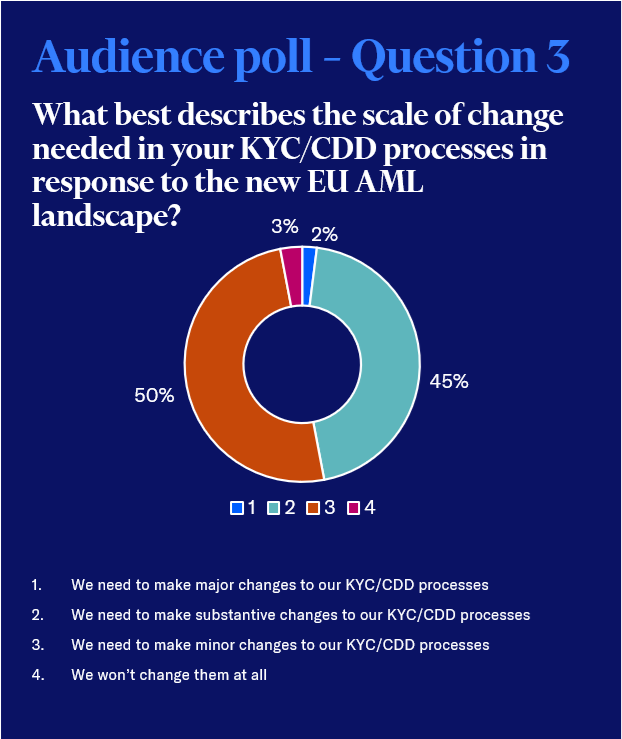
Audience poll question - What best describes the scale of change needed in your KYC/CDD processes in response to the new EU AML landscape?


Listen to the beneficial ownership podcasts

Risk Reframed


Podcast 1
Revisiting the US Corporate Transparency Act: Where are we now?

Join us as we catch up with Jim Richards on developments with the US Corporate Transparency Act (CTA) and FinCEN's beneficial ownership database. Gain valuable insights on the landscape for risk and compliance professionals, and the potential impact on combating financial crime.


Podcast 2
Reflecting on the ECJ’s ruling on access to beneficial ownership information - one year on

Listen in to this episode of Risk Reframed, which reflects on the ECJ's ruling on beneficial ownership registries. Maíra Martini and Andres Knobel provide insights on the implications for financial crime fighters and KYC professionals.


5 frequently asked questions about ultimate beneficial ownership

UBO FAQs


According to the Financial Action Task Force (FATF) definition, an ultimate beneficial owner (UBO), “refers to the natural person(s) who ultimately owns or controls a customer and/or the natural person on whose behalf a transaction is being conducted. It also includes those natural persons who exercise ultimate effective control over a legal person or arrangement. Only a natural person can be an ultimate beneficial owner, and more than one natural person can be the ultimate beneficial owner of a given legal person or arrangement.” 

Essentially, a UBO is the person who ultimately profits from a business and its transactions. An example of complex ultimate beneficial ownership would be a situation where a person holds shares in a company through a network of trusts or shell companies, which makes it difficult to determine true ownership. In this case, the ultimate beneficial owner would be the individual who ultimately benefits from their share ownership, even though their name may not be directly linked to the company on paper. 

Ultimate beneficial ownership is typically determined through a thorough investigation and analysis of an entity’s ownership structure. This can involve a process of entity verification and UBO checks - reviewing information on beneficial ownership registries, databases, or voting or controlling rights or examining legal documents, corporate records, and financial statements to trace the ownership. In some cases, UBO identification will require enhanced due diligence to confirm the ultimate beneficial owner through a process of UBO discovery.

The determination of UBO status is based on factors that might include the level of ownership or control a person has over an entity, their ability to benefit from its activities, and their influence over decision-making processes. In some jurisdictions, regulations may stipulate a certain percentage ownership (e.g., 25% or more) as a threshold for being considered a UBO, but this can vary depending on the country and the entity’s specific circumstances.

To calculate the specific threshold, both direct and indirect ownership, as well as aggregation need to be taken into consideration. As described in the 6th AML directive “...it is necessary to assess simultaneously whether any natural person has a direct or indirect shareholding with 25% or more of the shares or voting rights or other ownership interest, and whether any natural person controls the direct shareholder with 25% or more of the shares or voting rights or other ownership interest in the corporate entity. In the case of indirect shareholding, the beneficial owners should be identified by multiplying the shares in the ownership chain. To that end, all shares directly or indirectly owned by the same natural person should be added together.”


Organizations subject to regulatory requirements, such as financial institutions, need to conduct risk assessments on UBOs as part of their anti-money laundering (AML) and counter-terrorist financing (CTF) compliance. However, regulated and unregulated organizations have good reasons for wanting to understand whether a UBO could be considered high risk. Risk assessment could be part of an onboarding process - for example customer due diligence (CDD) or know your business (KYB) - or it could be part of ongoing counterparty risk management.

Risk assessment typically involves gathering information on the UBO’s background, reputation, financial standing, and potential connections to criminal activities. The nature of the business relationship, the types of transactions, and any regulatory risks may also be considered. Based on these findings, organizations can determine a UBO’s level of risk and make decisions about who they choose to work with.

Not all businesses are required to file beneficial ownership information reports under the Corporate Transparency Act (CTA). But there are enforcement and legal implications if a business is required to report BOI and fails to file its report with FinCEN. There may be several consequences including civil penalties of up to $500 per day for each day the violation continues, and criminal penalties for willful violations, including fines of up to $10,000 and imprisonment for up to two years.

[Correct to the best of our knowledge at the time of publication in March 2025]


This content is for information purposes and doesn't constitute legal, regulatory or compliance advice. The information presented has been prepared to the best of our knowledge at the time of publication.


Corporates
Corporates
Corporates


Further reading

UBO articles and videos

When an organization is placed on the Entity List, US exporters must obtain a license to supply them with controlled items. This can have implications not just for the listed entity but also for associated supply chains and other business relationships.

Know Your Business or KYB due diligence is essential when onboarding and monitoring corporate customers and suppliers as part of compliance and risk management. The onboarding program and ongoing risk reviews include a number of KYB checks that form part of an anti-money laundering (AML) and counter-financing of terrorism (CFT) program.

Learn how EU beneficial ownership rules affect verification processes under AML regulations. Moody's empowers you with smart compliance and due diligence tools.


Get in touch

Request a demo

Book a demo to see how Moody’s can help you streamline UBO discovery and strengthen your risk management strategy.